About The Clan Donnachaidh Society
The Society for all Clan Donnachaidh Branches Worldwide (Robertson, Duncan, Reid & Septs)
MoreThe Clan Donnachaidh Museum, offers an experience into the history and heritage of the Clan Donnachaidh. The Centre and Museum are situated within the popular destination shopping outlet - The House of Bruar - located just off the A9, north of Pitlochry.
On a visit to the centre, you can explore various exhibits showcasing the history, artefacts, and achievements of the Clan Donnachaidh. Discover recovered relics, documents, weaponry, traditional clothing, and more.
Open daily from 10am - 5pm
Open by appointment only - please contact admin@donnachaidh.com to make arrangements

Learn about the history and heritage of Clan Donnachaidh - the only Scottish Clan that still uses it Gaelic name. It's principal surnames are Robertson, Duncan and Reid, found in large numbers in the clan heartland in Perthshire and the neighbouring counties.

Discover historical artefacts that associate the clan with the jacobite uprising

The bronze statue is situated next to the Clan Museum building and is visable from the moment you enter the car park for House of Bruar, just off the A9, north of Pitlochry. The statue is a tribute to the achievements and sacrifices of all units of the st Highland Division and to the glorious story of our Highland Regiments.

Expert antiquarian opinion dates this gold portrait badge to 1745, the year of the final great Jacobite rising.

This travelling fiddle was found in the captured coach of General Sir John Cope, Commander of the Government army defeated by the Jacobite clansmen at the Battle of Prestonpans. The fiddle was given to the Clan Donnachaidh as part of their reward for ensuring their old Chief's safe return home.
More

This pistol dates from the classical period of the Scottish pistol.
More

This is the blade of what is a dirk, the Scottish stabbing knife the smaller version of which, the sgian dubh, was and still is worn in the stocking.

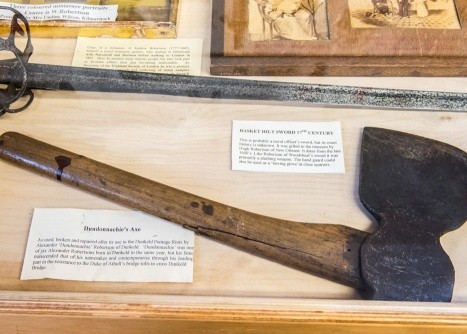
This axe and sporran belonged to Alexander Robertson of Dundonnachie (1825-1893), who led the riots against the tolls on the tay Bridge at Dunkeld in 1868/69.
MORE

The Clach na Brataich, The protective charm stone, said to have been discovered by the first Chief in the 1300's

The violin (or fiddle as it is commonly called in Scotland) is an important musical instrument used in Scotland particularly to preserve music whilst the bagpipe was prohibited after Culloden in 1745.

Discover the delicate shoe buckles that were reputedly worn by Bonnie Prince Charlie at a ball in Perth. These historical items are date back to the period of the Battle of Culloden.

The origin of this dagger is uncertain, but is more like the original fighting man's dirk in the Highlands than any other in the Museum. Like many dirks it is made from the broken blade of a sword and itdeed it still carries the famous name of the swordmaker, Andrea Ferrara. The pommel is also from a sword but not necessarily from the same one oas the blade. The simple bone handle helps to potentiate the grip in a way that ornamental dirks cannot do and never did. The component parts are of 18th century origin.

Here's a suggested itinerary of how you can spend your day with us here in the Highlands, from discovering clan history and artifacts to leisurely stroll over the Bruar falls. Take time out for a spot of lunch or afternoon tea at the House of Bruar. It's the perfect way to spend a day out here in the heart of Donnachaidh clanlands.

The Society for all Clan Donnachaidh Branches Worldwide (Robertson, Duncan, Reid & Septs)
More
The 1881 census index shows a very large number of people called Robertson, Reid and Duncan in Scotland.
More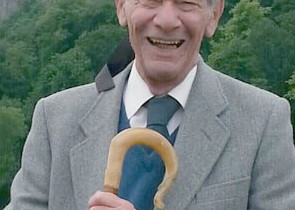
Alexander Gilbert Haldane Robertson of Struan is the 23rd Chief of Clan Donnachaidh
More