
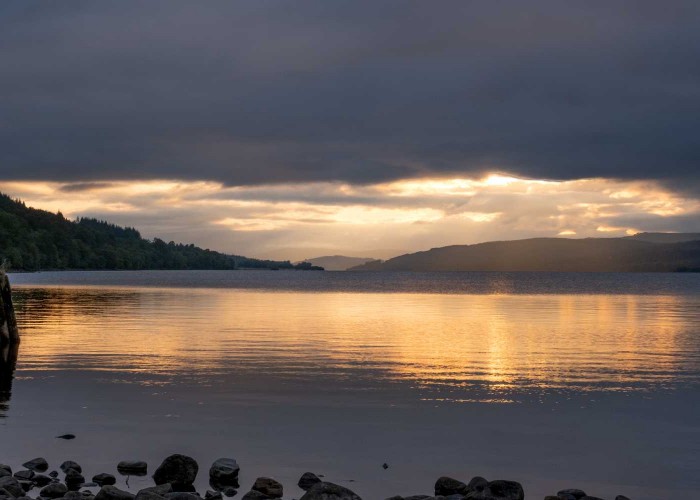
Rannoch
The village of Kinloch Rannoch was created in the period after the '45. It is a nomenclatural oddity.
MorePerhaps the most interesting and romantic mountain in Scotland, its name means either the Maiden's Pap which is most appropriate from the direction of Loch Rannoch, or the Seat of the Caledonian Fairies. During the last ice age, a great glacier had its seat on Rannoch Moor. From there it spread east gouging out the straths. Like an island, the peak of Schiehallion stood above the ice. The millennia of frost left the shattered boulders and scree that cover the summit ridge. The mountain is quartz but one large granite boulder near the top was carried like a cork on the surface of the glacier and deposited on the shore when the ice withdrew.
On the east side of the mountain lies the Maiden's Well fed by a crystal-clear spring of pure water that bubbles from the heart of the hill. Here on the dawn of Beltane, the first of May, the girls from the townships would dance and drink to bring health and good fortune for the coming year.
Long important in legend, Schiehallion achieved a unique distinction in the eighteenth century. Thanks to its isolated position and convenient shape the Astronomer Royal, Nevil Maskelyne, selected it for his experiment of 1774 to measure the density of the planet and thus establish the universal force of gravity promulgated by Newton which underpins the science of astronomy. He spent a soggy season on the mountain, setting up observatories and complex scientific instruments to measure the minute amount that the mountain attracted a pendulum by comparing its angle to the stars. Amongst his assistants was William Mason who invented the contour line to assist his side of the work which fixed the position of Maskelyne's pendulum by triangulation. Mason gave his name to the Mason-Dixon Line which marked the boundary of the northern and southern states of America.


The Astronomer Royal employed a local gillie, Duncan Robertson, whose fiddle whiled away those frequent evenings when the mountain was shrouded in mist and cloud, preventing observation of the heavens. At the end of the first summer on Schiehallion, Maskelyne threw a ceilidh in the bothy on the mountain for those locals who had built it for him. Whisky was taken; the bothy caught fire; Duncan's fiddle was destroyed. The following spring the carrier brought a parcel from London containing a gift from the Englishman. It was a new violin resplendent in yellow varnish for which the recipient composed a song 'The Yellow London Lady'.
In the early nineteenth century the fiddle was broken and Duncan's descendant sent it to Manchester to be mended. There is some doubt if the repairer returned the correct instrument. Nevertheless the fiddle was handed down through the family, is still played and can be seen at the Clan Donnachaidh Museum at Bruar.
One winter in the late nineteenth century, a devout and pious girl named Margaret Ritchie vanished from her home in the strath below. Ten days later her body was found in her nightdress frozen solid right on the mountain peak. She was lying on her back, her arms crossed, and had a sweet smile on her face.
The village of Kinloch Rannoch was created in the period after the '45. It is a nomenclatural oddity.
More
Situated in the central part of Scotland, Strathtummel is within easy reach of highland Perthshire, home to historical sites and
More
Along the north face of the strath between Logierait and Aberfeldy are eleven estates whose boundaries have been largely unchanged
More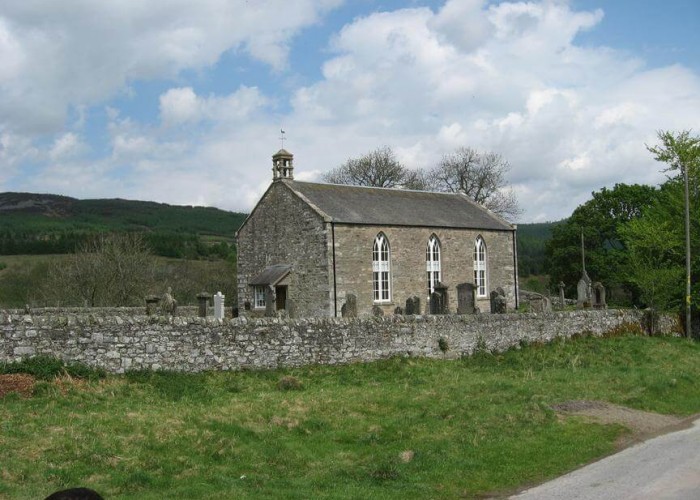
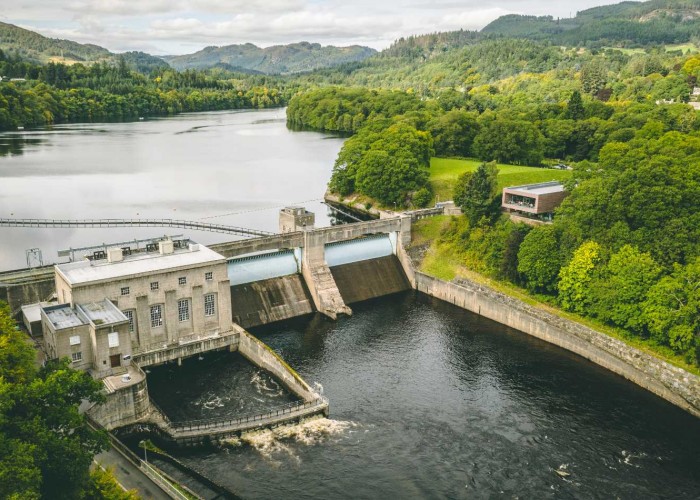
Pitlochry has kept pace with the times. Thousands come from all over the world to make this one of the most important stops on the
More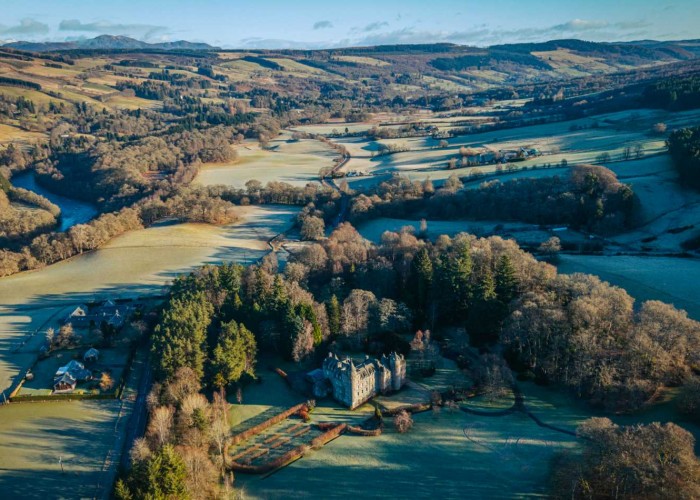

St Mary's Chapel in Grantully near Aberfeldy with a magnificent 1600s painted ceiling
More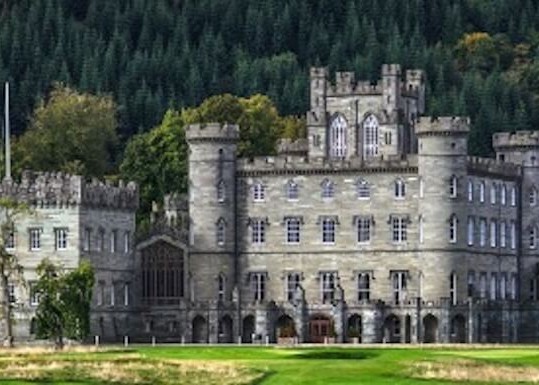
The spectacular Gothic edifice of Taymouth Castle is one of the grandest buildings in Scotland. Most was completed in 1807 by
More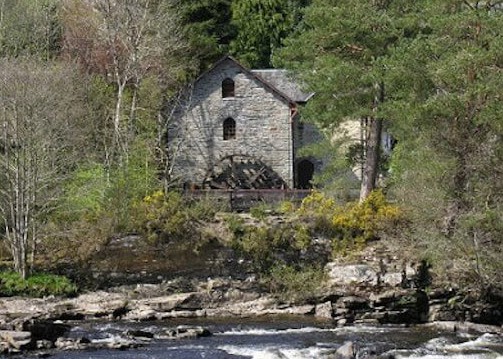
Much of what is now called Breadalbane used to be in Atholl but the incoming Campbells of Glenorchy took the name as the title of
More
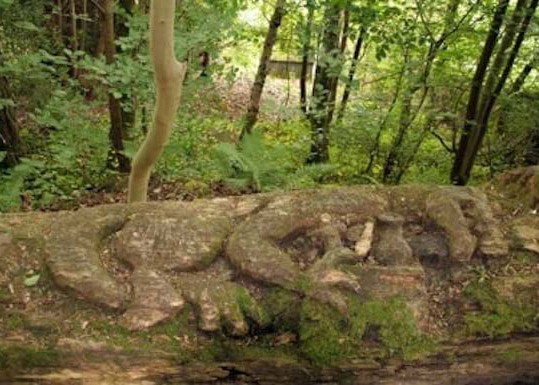
The name comes from the word 'uamh' in Gaelic which means cave. The caves are in the wooded crags above the village
More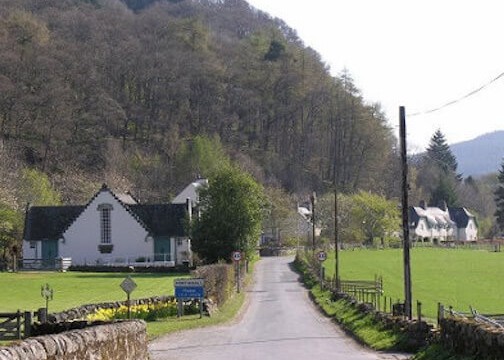
Recently crop marks have been observed much closer to the village and, although confirmation is still needed, they show signs of b
More
Dunalastair and the estate is home to rare wildlife of Perthshire with offers scenic strolls around famous gardens
More

Some appreciate Highland Perthshire as no more than one of the most beautiful parts of Scotland.
More
The chiefs of Clan Menzies used to have their seat at Comrie Castle on the south bank of the river Lyon
More
Dunkeld and its cathedral were saved by the Dukes of Atholl. They were the law across 500 square miles of the Highl
More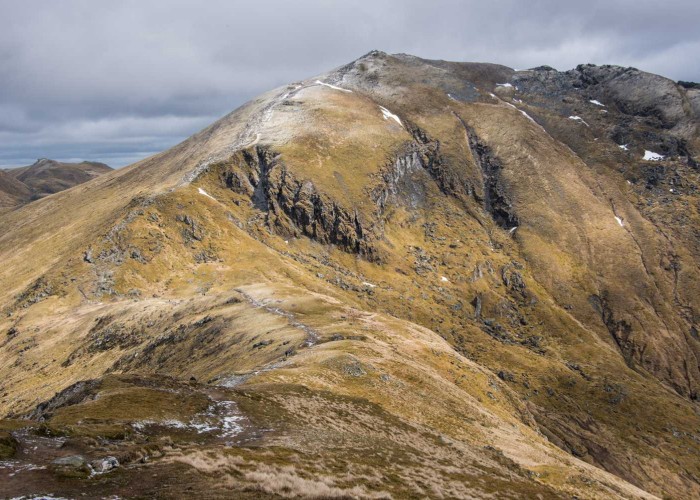
In the last few summers, Glasgow University archeologists have been exploring the mountain and have discovered t
More
Once fortifications would have covered the site of Garth Castle but now only the central keep remains
More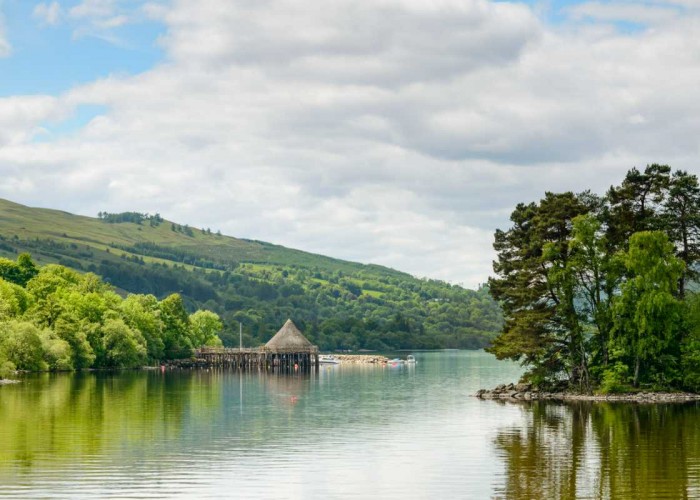
This, Scotland's sixth biggest loch, covers six and half thousand acres in its 14 miles between Kenmore and Killin. For thousan
More
The Glen was once home to over a thousand folk and on one of the best trodden thoroughfares between the western Highlands and the E
More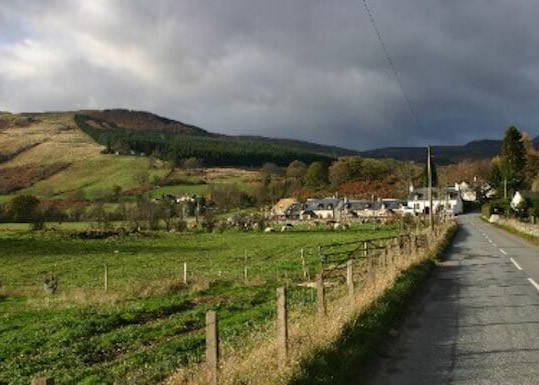
The statue to David Stewart of Garth, erected by the Stewart Society in 1925, in the uniform of a Black Watch captain
More
The double stone circle of Mary's Croft, an impressive standing stone monument in highland Perthshire
More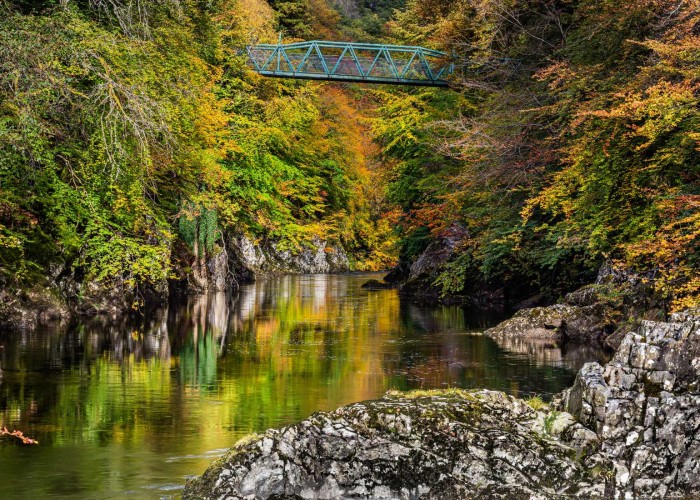

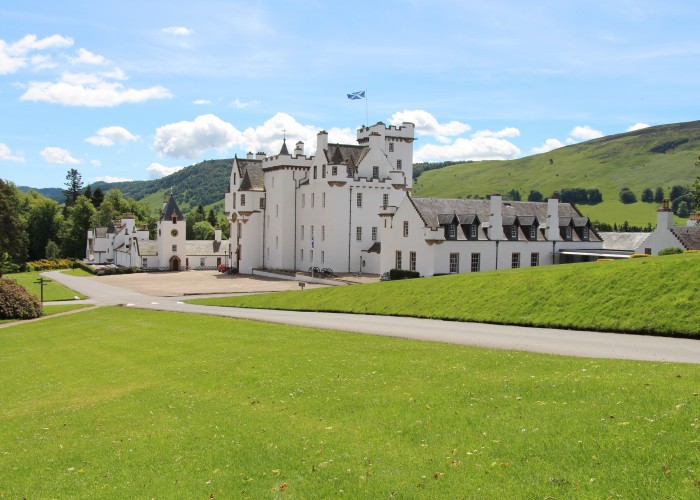

Aberfeldy is what used to be called a thriving market town. The market has long closed but the town still thrives.
More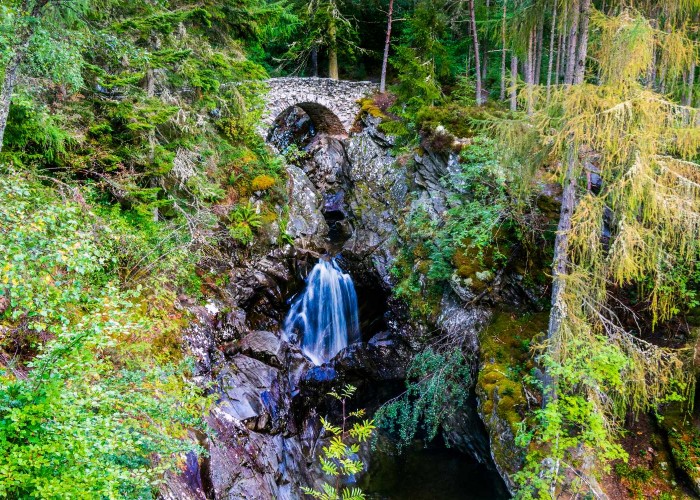
The site of the clan centre at Bruar is at the base of one of those spectacular gorges carved through soft rock by a burn in spate
More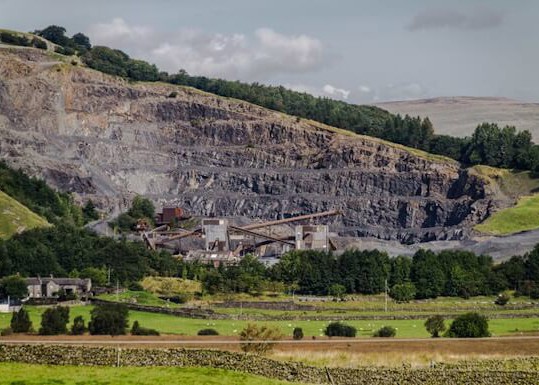
The history behind Shierglas Quarry - Set back the busy A9 road, connecting the south and north of Scotland.
More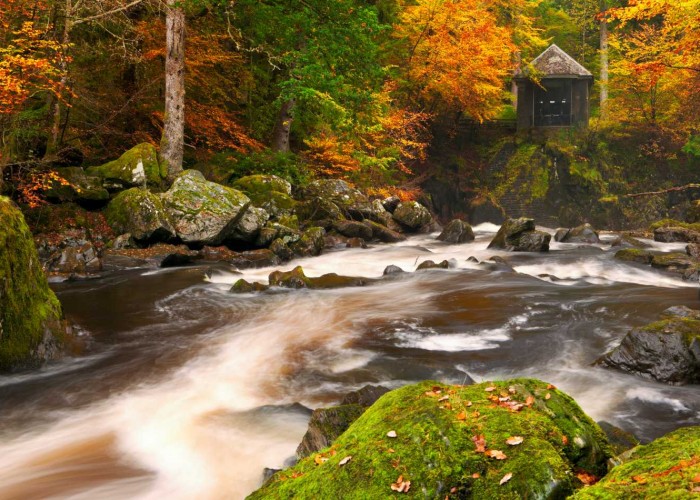
The building contained a chandelier and its walls were lined with mirrors reflecting the falls of turbulent river which was int
More
The castle, in private hands, dates from the late 1600s but doubled in size early this century.
More